25 Common Mistakes Jewellery Manufacturers Make (And How to Avoid Them)

Running a jewellery manufacturing unit looks simple from the outside — melt, cast, polish, ship. In reality, even experienced manufacturers lose lakhs every month to small, repeatable mistakes: porous castings, inefficient factory layouts, poor gold recovery, and outdated machinery that quietly eats into margins.

At IMTEX Industries, we’ve spent over three decades helping jewellery manufacturers across India, the UAE, and beyond set up precision-engineered, turnkey production facilities. Along the way, we’ve seen the same 25 mistakes surface again and again — across small workshops and large export houses alike.

Here’s the complete list, along with practical fixes for each one.


1. Ignoring Casting Machine Calibration

Many manufacturers assume a casting machine works the same on day one and day one thousand. Vacuum pressure, induction timing, and temperature settings drift over time, leading to inconsistent castings. Regular calibration checks on your jewellery vacuum casting system prevent this silent quality drop.

2. Overlooking Investment Powder Quality

Cheap or expired investment powder is one of the top causes of casting porosity and surface defects. Always source consistent-grade investment material and store it in a controlled, moisture-free environment.

3. Poor Wax Injection Technique

Injecting wax too fast or at the wrong temperature creates air pockets in the wax pattern itself — long before the metal ever touches the mould. This is a leading cause of jewellery casting porosity problems.

4. Inconsistent Melting Temperatures

Manufacturers relying on old-style melting furnaces without digital temperature control often overheat or underheat their alloys, causing oxidation, gas absorption, and weak castings. A digital electric melting furnace with precise temperature readouts solves this instantly.

5. Skipping Vacuum Degassing Before Pouring

Trapped air in molten metal is one of the most underrated causes of porosity. Manufacturers who skip a proper degassing step before pouring are essentially guaranteeing rework.

6. Not Investing in a Vacuum Investment Mixer

Manual mixing of investment powder introduces air bubbles that a vacuum investment mixer would otherwise eliminate. This single upgrade can dramatically cut down casting rejection rates.

7. Bad Factory Layout and Workflow Planning

Many manufacturing units are set up department-by-department without thinking about material flow — wax, casting, cutting, polishing, and setting stations end up scattered across the floor, adding unnecessary handling time and metal loss risk. A well-planned jewellery factory layout design improves both speed and traceability.

8. Underestimating Gold and Silver Recovery Systems

Without a proper gold recovery and settling tank, precious metal dust and effluent quietly go down the drain — literally. Over a year, this “invisible” loss can amount to lakhs of rupees.

9. Using Outdated or Manual Polishing Methods

Manual polishing is slow, inconsistent, and heavily dependent on operator skill. A single-station polishing unit standardizes finish quality and reduces piece-to-piece variation.

10. Not Accounting for Water Cooling in Casting Lines

High-volume casting operations generate significant heat. Without an industrial water chiller, casting machines run inefficiently and component life shortens dramatically.

11. Choosing the Wrong Casting Machine for Production Volume

A manufacturer producing small batches of high-value pieces has very different machine needs than one running high-volume, lightweight chain production. Mismatched machinery — like using an industrial-scale casting machine for boutique work — wastes capital and floor space.

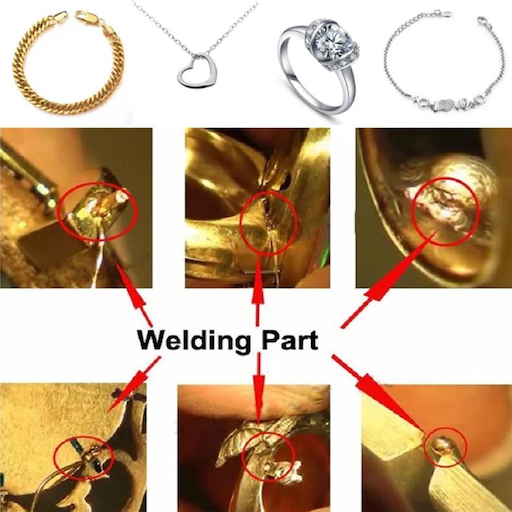
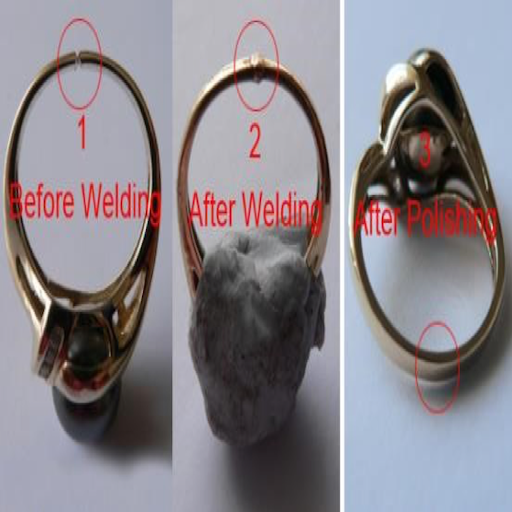
12. Neglecting Laser Welding for Repairs and Assembly

Manufacturers still relying on torch welding for delicate repairs risk discoloration, heat damage, and stone loss. A laser welder for jewellery allows precision repairs without damaging surrounding metal or gemstones.

13. Skipping Laser Marking for Hallmarking and Branding

With hallmarking compliance now standard, manufacturers without in-house laser marking machines face delays and third-party dependency for stamping purity marks, brand logos, and serial numbers.

14. Not Training Operators on New Machinery

Even the best casting machine underperforms in untrained hands. Manufacturers frequently invest in new technology but skip structured training — leading to avoidable defects and safety risks.

15. Ignoring Preventive Maintenance Schedules

Reactive maintenance — fixing machines only after they break — leads to production downtime at the worst possible moments. A preventive maintenance calendar for casting machines, chillers, and polishing units keeps production predictable.

16. Overlooking Metal Wastage During Cutting and Filing

Small inefficiencies during cutting, filing, and sprue-cutting add up over thousands of pieces. Manufacturers who don’t track metal wastage in jewellery manufacturing rarely realize how much is lost until they do a full audit.

17. Poor Quality Control Between Production Stages

Many units only inspect finished pieces, missing defects that originated at the wax or casting stage. Introducing quality checkpoints after each major process step — wax, casting, cutting, polishing — catches issues earlier and cheaper.

18. Underestimating the Importance of a Turnkey Setup Partner

Manufacturers who buy machines individually, from different vendors, without an integrated production plan, often end up with equipment that doesn’t work well together. A turnkey jewellery factory setup ensures every machine — casting, chilling, mixing, polishing — is sized and sequenced correctly from day one.

19. Not Scaling Micro-Factories for Rising Gold Prices

With gold prices at record highs, many small manufacturers are still running on setups designed for a very different cost environment. Compact, efficient micro-factory setups help smaller manufacturers stay profitable even as raw material costs climb.

20. Overlooking Consumables Quality (Flux, Crucibles, Tools)

Manufacturers often focus capital spending on big machines while neglecting consumables like crucibles, flux, and casting tools. Low-quality consumables directly affect casting purity and machine lifespan.

21. Delaying Automation for Chain and Repetitive Item Production

Manufacturers producing high volumes of gold chains manually are often surprised by how quickly an automatic gold chain making machine pays for itself through labor savings and consistent output.

22. Not Planning for Effluent and Waste Management

As environmental compliance tightens, manufacturers without a proper effluent treatment and settling system for casting waste risk regulatory penalties — and lose recoverable precious metal in the process.

23. Underinvesting in After-Sales Technical Support

Buying machinery from vendors with no local service or support network means long downtimes when something goes wrong. Manufacturers should prioritize suppliers offering ongoing technical support for jewellery machinery.

24. Not Benchmarking Against Industry Standards

Some manufacturers set internal quality and efficiency benchmarks based on outdated assumptions, never checking how modern casting and finishing technology has shifted the bar industry-wide.

25. Trying to Scale Without Process Optimization

Perhaps the biggest mistake: scaling up production capacity (more machines, more staff) without first optimizing existing processes. This multiplies existing inefficiencies rather than fixing them — the fastest way to scale losses along with output.


How IMTEX Industries Helps Manufacturers Avoid These Mistakes

For over 30 years, IMTEX Industries has partnered with jewellery manufacturers to eliminate exactly these kinds of costly errors — through:

  • Precision casting machines engineered for consistent, porosity-free results
  • Turnkey factory setup — from layout design to installation and commissioning
  • Laser welders and markers for precision repair and compliant hallmarking
  • Metapro casting material and consumables for reliable, repeatable quality
  • Training and ongoing technical support so your team operates every machine with confidence

Whether you’re setting up a new micro-factory or upgrading an existing production line, avoiding these 25 mistakes starts with the right equipment, the right layout, and the right partner.

Ready to fix inefficiencies in your jewellery manufacturing process? Get a free consultation with IMTEX Industries and explore our range of casting machines, turnkey solutions, and jewellery manufacturing consumables.
Why Jaipur Jewellers Are Switching to Advanced Laser Welders in 2026

Laser welder machine
picture1

Jaipur has long been the heart of India’s gemstone and handcrafted jewellery industry. In 2026, however, a clear shift is underway. From heritage workshops in Johari Bazaar to export-oriented units in Sitapura Industrial Area, jewellery manufacturers are rapidly adopting advanced laser welding technology.

This transition is not driven by trends alone—it’s a strategic response to rising costs, stricter quality standards, and the demand for flawless finishing with faster turnaround times. Laser welders are helping Jaipur jewellers protect their craftsmanship while scaling efficiently in a highly competitive global market.

Jaipur Jewellery Manufacturing Landscape in 2026

Industry estimates suggest Jaipur contributes over 40% of India’s coloured gemstone jewellery exports, blending centuries-old techniques such as kundan, jadau, and meenakari with modern manufacturing.

Key challenges faced today:

  • Shortage of skilled labour and rising wages
  • Increased rejection due to heat-sensitive gemstones
  • Pressure from export buyers for consistent quality
  • Faster delivery expectations from online and D2C brands
  • Competition from automated manufacturing hubs

These realities are pushing Jaipur jewellers to upgrade from traditional soldering to precision laser welding systems.

What Is Jewellery Laser Welding?

Jewellery laser welding uses a high-energy, focused laser beam to join metals with extreme accuracy—without spreading heat to surrounding areas.

How it differs from torch soldering:

  • Heat zone limited to less than 0.5 mm
  • Stones and enamel remain safe during repairs
  • No flux, minimal polishing, no discoloration
  • Strong, clean, and nearly invisible joints

Modern machines typically include:

  • 50W–400W laser source
  • High-magnification microscope or CCD camera
  • Pulse control for different alloys
  • Argon gas shielding
  • Ergonomic workstation design

Top Reasons Jaipur Jewellers Are Adopting Laser Welders

  1. Zero Damage to Precious Stones

Laser welding allows repairs and resizing without removing gemstones, preventing cracking, colour change, or loosening—especially critical for emeralds, opals, and meenakari work.

  1. Precision for Intricate Jaipur Designs

From fine chain repairs to prong retipping and hollow jewellery assembly, laser welders offer pinpoint accuracy up to 0.2 mm, ideal for traditional and contemporary designs alike.

  1. Faster Production & Higher Output

What once took over an hour with soldering can now be completed in 10 minutes, enabling workshops to handle 3–5× more jobs per day.

  1. Superior Finish Quality

Laser welds are clean and oxidation-free, reducing polishing time and improving overall aesthetics—especially important for export and branded jewellery.

  1. Long-Term Cost Savings

Although the initial investment is higher, jewellers typically see:

  • 50–70% reduction in solder usage
  • Lower labour hours per piece
  • Minimal rework and metal loss
  • Reduced safety and insurance risks

Many Jaipur manufacturers report ROI within 12–24 months, depending on workload.

  1. Expanded Service Capabilities

Laser welding enables:

  • Platinum and white gold repairs
  • Antique jewellery restoration
  • Mixed-metal joining
  • Invisible repairs for branded jewellery

These services attract premium clients and higher margins.

  1. Future-Ready Manufacturing

Laser welding aligns with:

  • BIS hallmarking standards
  • Export compliance requirements
  • CAD/CAM-based workflows
  • Sustainable, low-waste production

Jewellery Laser Welder Price in India (2026 Guide)

CategoryPowerPrice RangeIdeal For
Entry Level50–80W₹2.5 – ₹4.5 lakhRepair & small workshops
Professional100–200W₹5 – ₹9.5 lakhManufacturing + repair
Industrial200–400W₹10 – ₹18 lakhExport & high-volume units

Price depends on: laser type, optics quality, control features, warranty, training, and after-sales support.

ROI Example: Jaipur Manufacturer Case Study

Investment: ₹7,00,000 (machine + training)
Monthly savings: ₹60,000
Additional service revenue: ₹45,000
Total monthly benefit: ₹1,05,000

➡️ Payback period: ~7 months
➡️ Annual benefit: ₹12+ lakh

Choosing the Right Laser Welder for Your Workshop

Key factors to evaluate:

  • Required wattage based on jewellery type
  • Microscope quality (20x–40x)
  • Pulse and spot size control
  • Local service availability
  • Operator training (Hindi + English)
  • Spare parts and maintenance support

Suppliers such as Imtex Industries provide turnkey solutions including installation, training, and ongoing technical support tailored to Jaipur’s jewellery ecosystem.

Blending Technology with Jaipur’s Craftsmanship

Laser welding does not replace traditional skills—it enhances them.

Traditional expertise remains essential for:

  • Design and wax carving
  • Stone setting
  • Meenakari and hand finishing

Laser welding excels at:

  • Structural joining
  • Precision repairs
  • Resizing and assembly

The result is a hybrid workflow that preserves heritage while meeting modern quality standards.

Future Trends: 2026 and Beyond

  • AI-assisted welding parameters
  • CAD/CAM to laser-welding integration
  • Energy-efficient fibre lasers
  • Growth in lightweight and lab-grown diamond jewellery
  • Stricter quality and traceability norms

Early adopters will gain a long-term competitive edge.

Local suppliers with Jaipur-based service teams, such as Imtex Industries, help reduce downtime and training gaps.

Final Thoughts

Jaipur jewellers are switching to advanced laser welders because the technology delivers precision, speed, safety, and profitability—without compromising craftsmanship. Whether you run a small repair studio or a large export unit, laser welding is quickly becoming an industry standard rather than an upgrade.

Ready to Explore Laser Welding?

  • Book a live demo to test laser welding on your own jewellery pieces and receive a customised ROI report.”
  • Get a customised ROI calculation
  • Explore flexible financing options

🌐 Website: imtexindustries.in
📍 Location: Jaipur, Rajasthan

Top 7 Machines Every Modern Jewellery Manufacturer Must Have to Shine Brighter

In the dazzling world of jewellery manufacturing, precision, efficiency, and innovation are the true hallmarks of success. To stay ahead in a competitive market and meet the ever-evolving demands of discerning customers, modern jewellery manufacturers must invest in advanced machinery.

At Imtex Industries, we understand the pulse of the jewellery industry. That’s why we’ve put together this guide to the essential machines that not only enhance craftsmanship but also improve production efficiency and overall profitability.

With rising gold prices, tighter margins, and increasing demand for precision, investing in the right machinery has never been more critical.

Here are the top 7 machines every modern jewellery manufacturer must have:


1. Laser Welding Machine

Gone are the days of tedious and often imprecise traditional soldering. Laser welding machines have revolutionized jewellery repair and manufacturing by offering exceptional accuracy and control. They create strong, virtually invisible welds on even the most delicate pieces without heat distortion. This results in faster repairs, stronger settings, and the ability to work with a wider range of metals.


2. Induction Melting Furnace

For casting precious metals, an efficient and reliable melting solution is essential. Induction melting furnaces provide rapid heating, precise temperature control, and a cleaner melting process compared to traditional flame-based methods. This ensures better metal quality, reduced material loss, and a safer working environment. A high-quality induction furnace from Imtex Industries delivers consistent and dependable results for all casting requirements.


3. Vacuum Pressure Casting Machine

Producing intricate designs and flawless castings requires advanced casting technology. Vacuum pressure casting machines eliminate porosity and ensure complete mold filling by applying both vacuum and pressure during the casting process. The result is denser, stronger, and bubble-free castings, significantly reducing rework and improving final product quality.


4. Tumbling and Polishing Machine

The final polish is what gives jewellery its true brilliance. Manual polishing is time-consuming and often inconsistent. Tumbling and polishing machines automate this crucial finishing process, using specialized media to deburr, smooth, and polish multiple pieces simultaneously. This saves labor costs while delivering a uniform, high-quality finish every time.


5. CAD/CAM Software & 3D Printer

The integration of CAD/CAM software with 3D printing technology has transformed jewellery design and prototyping. CAD software enables designers to create highly detailed and complex models with precision. These designs can then be converted into wax or resin prototypes using a 3D printer, making them ideal for casting. This combination shortens design cycles, allows rapid modifications, and unlocks new creative possibilities.


6. Ultrasonic Cleaner

Cleanliness is critical at every stage of jewellery manufacturing. Ultrasonic cleaners use high-frequency sound waves to remove dirt, grease, and polishing compounds from even the most intricate details of jewellery pieces. This ensures a spotless finish and prepares items for plating, stone setting, or final inspection.


7. Rolling Mill

For manufacturers working with sheet metal and wire, a reliable rolling mill is indispensable. Rolling mills allow precise reduction of metal thickness to create custom gauges for various jewellery components. A robust rolling mill from Imtex Industries offers durability, control, and consistency for high-quality metal fabrication.


Why Choose Imtex Industries for Your Jewellery Manufacturing Needs?

At Imtex Industries, we are committed to supplying state-of-the-art jewellery machinery that empowers manufacturers to achieve excellence. Our comprehensive product range is supported by expert guidance, reliable after-sales service, and a deep understanding of industry needs.

Investing in the right machines is not just an upgrade to your workshop—it’s an investment in the future growth and success of your business.

Ready to elevate your jewellery manufacturing process?

Explore our extensive range of machinery and discover how Imtex Industries can help you shine brighter in today’s competitive jewellery market.

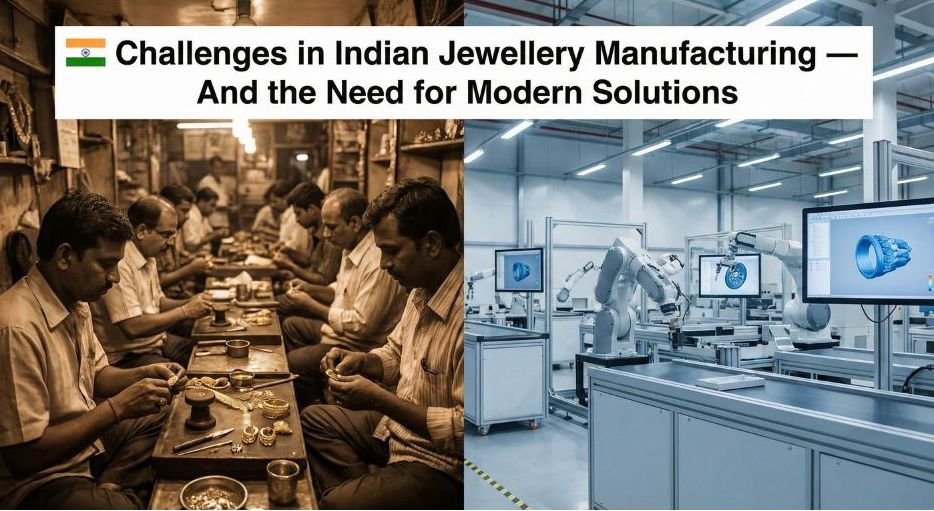
🇮🇳 Challenges in Indian Jewellery Manufacturing — And the Need for Modern Solutions

untitled design 1

India is one of the world’s largest jewellery markets, yet many manufacturers continue to face long-standing bottlenecks that affect production quality, consistency, and profitability. While the artistry and heritage of Indian jewellery are unmatched, the industry’s shift toward precision engineering requires modern systems and smarter manufacturing practices.

🧩 1. Dependency on Skilled Manual Labour

Traditional craftsmanship is India’s strength — but also a constraint.
Manual casting, finishing, and polishing processes lead to:

  • Inconsistency in quality

  • Slow production timelines

  • Difficulty scaling operations

Solution: Introducing automated casting machines, polishing stations, and laser systems can standardize results and reduce labour dependency.


🔥 2. Inconsistent Casting Quality

Many workshops still use outdated casting setups, resulting in:

  • Porosity

  • Shrinkage defects

  • Rough finishing and extra polishing time

  • Metal wastage

Solution: Advanced vacuum casting, induction melting, controlled burnout, and high-grade investment powders ensure clean, void-free castings.


⚙️ 3. Limited Technology Adoption

Despite being a large industry, adoption of automated machinery often lags due to:

  • Limited technical awareness

  • Investment hesitation

  • Old production practices

Solution: Modern machinery and turnkey setups help achieve global production standards and improve ROI by reducing errors and rework.


⏱️ 4. Inefficient Production Workflow

Unstructured workshop layouts cause:

  • Slow movement of materials

  • Unnecessary handling

  • Higher labour time and cost

Solution: Streamlined factory design improves workflow, productivity, and safety.


🧪 5. Substandard Materials & Consumables

Low-grade casting materials result in:

  • Weak moulds

  • Loss of detailing

  • Surface defects

Solution: Using premium investment powders, injection wax, and moulding rubber ensures sharp moulds and flawless output.


🎓 6. Training & Skill Gaps

Many workshops lack structured technical training, leading to:

  • Errors in burnout schedules

  • Improper metal handling

  • Inconsistent mixing ratios

Solution: Professional training and knowledge transfer from experienced industry engineers can elevate production quality.


Shaping a Modern Future for Indian Jewellery

With increasing export demand, design complexity, and global competition, India’s jewellery industry must embrace:

  • Automation

  • Modern machinery

  • Better materials

  • Process discipline

  • Skilled technical guidance

This evolution isn’t just about machines — it’s about transforming craftsmanship into precision manufacturing, enabling Indian jewellery to dominate global markets with efficiency, accuracy, and innovation.


Imtex Industries — Supporting India’s Manufacturing Transformation

At Imtex Industries, we assist manufacturers through:

  • Advanced jewellery casting machinery

  • Turnkey factory setup solutions

  • High-performance consumables (Metapro)

  • Technical guidance backed by decades of expertise

Because excellence isn’t achieved by accident —
it’s engineered.

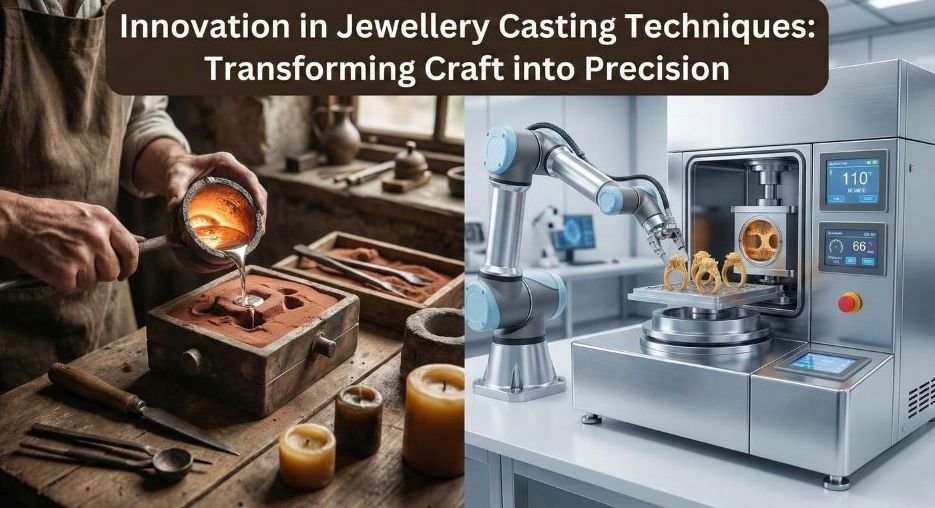
Innovation in Jewellery Casting Techniques: Transforming Craft into Precision

untitled design 2

Jewellery making has always been a blend of art and science. From traditional hand-crafted moulds to modern automated casting systems, the industry has evolved dramatically — and at the heart of this evolution lies innovation in jewellery casting technology.

Today’s jewellery manufacturers demand accuracy, repeatability, and flawless finish, and this is where modern casting systems redefine craftsmanship.

From Traditional to Technological Excellence

Earlier casting relied heavily on manual skill, which often led to inconsistencies in detailing, metal shrinkage, and surface finish. Now, advanced machines and engineered investment materials enable:

  • Higher precision in moulding and cavity formation

  • Reduced porosity and shrinkage issues

  • Improved metal flow and surface finish

  • Consistent casting results at scale

The Role of Modern Casting Machinery

Innovations like vacuum casting furnaces, automatic wax injectors, digital temperature control systems, and advanced burnout furnaces have empowered jewellers to produce luxury-grade designs with confidence.

At Imtex Industries, we build machinery that supports:

✅ High detail reproduction
✅ Thermal accuracy & stability
✅ Efficient metal melting and handling
✅ Smooth, defect-free surfaces
✅ Faster production cycles

This is how technology bridges creativity and efficiency, giving artisans the freedom to bring intricate designs to reality.

Investment Powders — The Backbone of Perfection

Advanced investment casting powders allow better slurry flow, strength, and burnout performance — delivering sharp detailing, clean cavities, and smoother finishes.

Our Metapro casting material solutions are engineered to complement professional casting setups, ensuring stable, consistent, and premium results.

Turnkey Casting Expertise

Modern jewellery factories are moving towards complete automated setups, where layout, machinery, and workflow are integrated to optimize quality and output. Imtex Industries supports manufacturers with turnkey project solutions, setting up streamlined production units guided by 50+ years of real-world casting expertise.

Shaping the Future of Jewellery Manufacturing

The future belongs to brands that embrace technology. With continuous improvements in metallurgy, automation, and material science, jewellery casting is entering a new era of speed, precision, and innovation.

At Imtex Industries, we are proud to contribute to this transformation — helping craftsmen evolve into world-class manufacturers.